

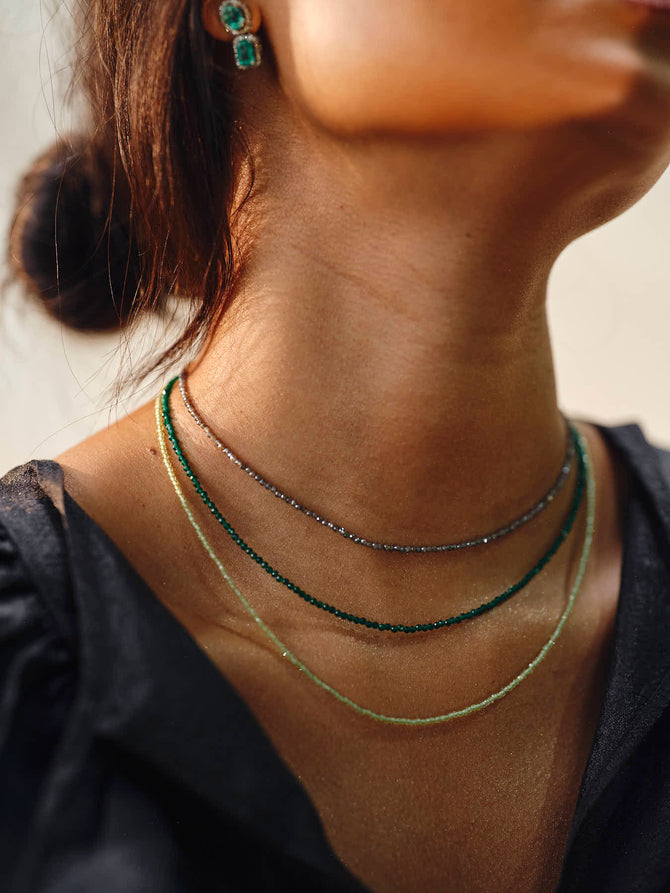
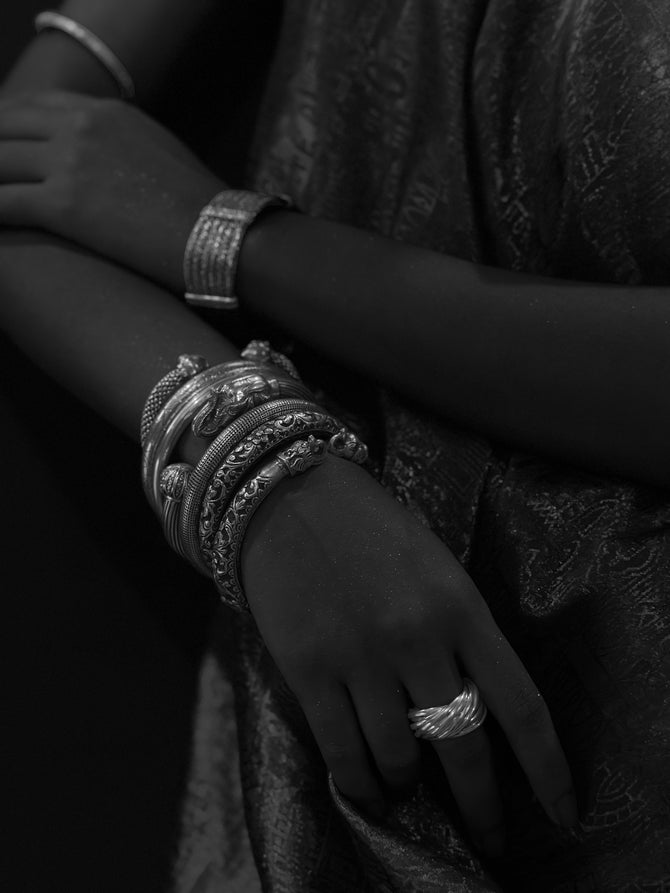
There was a time in Europe when love was rarely spoken plainly. Courtships were watched, letters were read, and feelings — the real ones — had to travel by other means.
So they travelled by jewellery.
In the drawing rooms and royal courts of 19th century Europe, a quiet celestial code emerged. A diamond star pinned into the hair. A crescent moon brooch resting near the heart. To the untrained eye, mere ornament. To those who understood, an entire confession.
The Star: "You Are My North Star"
Stars — almost always set in diamonds or pearls — symbolised spiritual guidance and direction. To gift or wear one was to say: you are the fixed point I navigate by. My love is written in the heavens.
It was deeply sentimental, and deeply fashionable. Stars were especially favoured as hair ornaments, glittering against braids and chignons by candlelight.
No one wore them more famously than Empress Elisabeth of Austria — the legendary "Sisi." She commissioned 27 diamond-and-pearl stars from the imperial court jeweller and braided them directly into her famous floor-length hair. Her 1865 portrait, ablaze with stars from gown to crown, became one of the most copied images in Europe. Queens followed. Queen Alexandra of Britain helped carry the trend across the Channel, wearing celestial stars as brooches and hair jewels alike.
One empress looked up at the night sky, and a continent followed.
The Moon: Power, Change, and Becoming
If the star spoke of devotion, the crescent moon spoke of the woman herself.
The moon was linked to Diana — goddess of the hunt, the wild, the untamed feminine. Wearing a crescent was a quiet declaration of female power in an era that offered women very few loud ones.
But the moon carried a second meaning, and it may be the more beautiful one. The moon moves through phases. It is never finished. And so the crescent came to symbolise change, growth, new beginnings — a life advancing, a relationship deepening into something meaningful and lasting.
A full moon: completeness, arrival, a love realised. A half moon: becoming, potential, the best still ahead.
These weren't just accessories. They were autobiographies in miniature.
Versatile Then, Versatile Now
One thing rarely mentioned: these jewels were remarkably adaptable. The same star could be worn as a brooch, a pendant, or a hair ornament. A crescent moved from the shoulder to the hair depending on the evening. Jewellery was designed to live many lives — a philosophy we think deserves a comeback.
The celestial look reigned well into the early 1900s. Then, like all constellations, it faded from view.
We Never Stopped Looking Up
At Pataaka, we believe the most powerful jewellery has always done two jobs: it adorns, and it says something.
Our new celestial edit is a love letter to that old European language, reimagined for how we live now:
- Full Moon Earrings — for completeness. For the woman who has arrived, on her own terms.
- Half Moon Earrings — for becoming. For every phase you're still growing into.
- Moon & Star Bracelets — the guidance of the star and the power of the moon, worn together on your wrist. Devotion and self-possession, side by side.
Because the truth the Victorians understood still holds: some things are easier to wear than to say.
You are my North Star. I am still becoming. My story is written in the heavens.
Say it without saying it.
Explore the Celestial Edit → [link]


