

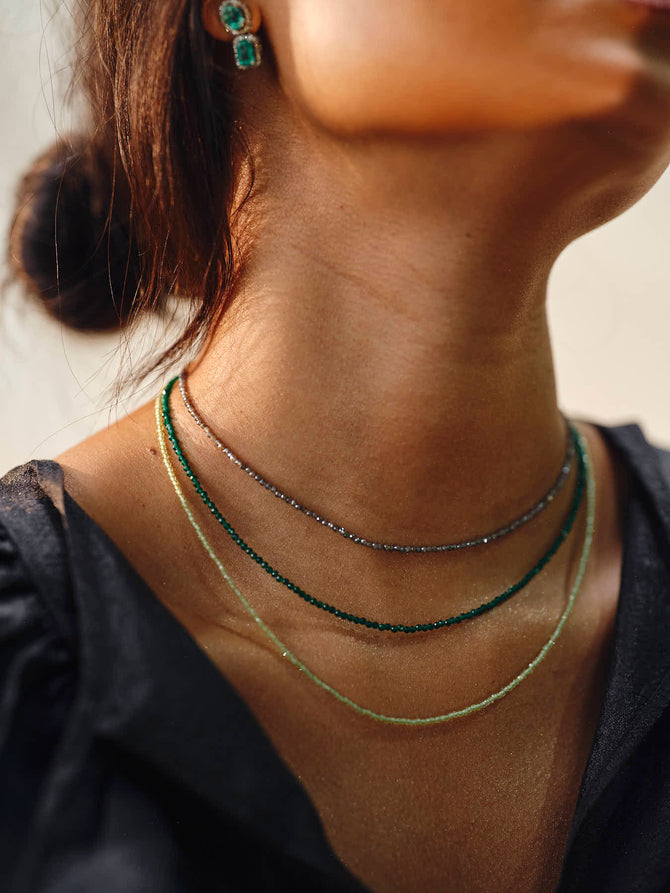
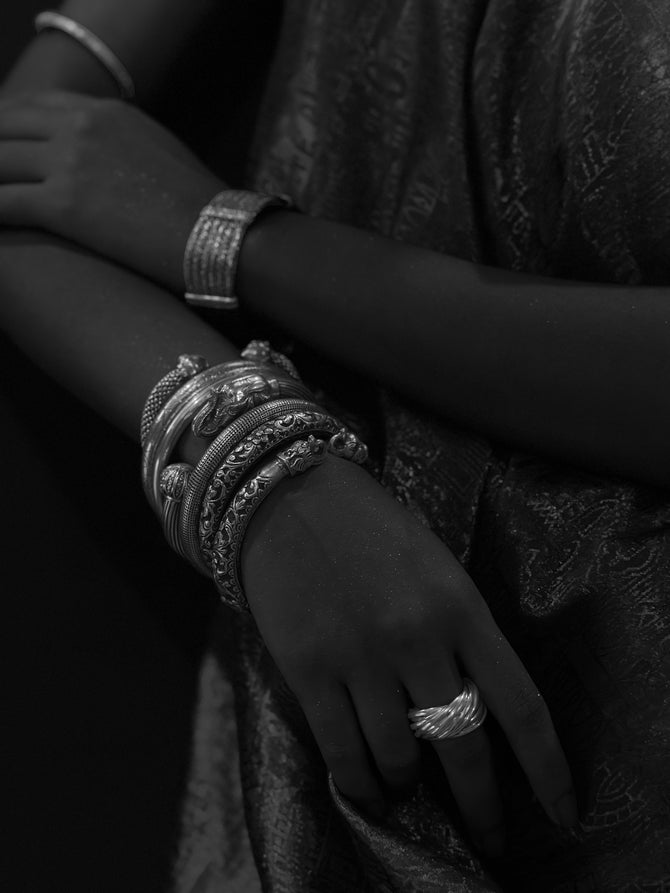
Silver has a peculiar hold on human history. Unlike gold, which sits in vaults as ultimate wealth, or iron, which built civilizations through tools and weapons, silver has always existed at an intersection—precious enough to crown empires, practical enough to feed economies, and beautiful enough to move us aesthetically. Its story is the story of how humans value what glows.
The First Discoveries
Silver appears in the archaeological record around 3000 BCE, and we find it first in Anatolia—what is now Turkey. This is significant. While gold could be found in river beds and mountain streams, gleaming in its pure form, silver required something more ambitious: smelting. The first silversmiths weren't simply gathering treasure; they were solving problems. They were learning to heat ore, to separate the metal from the stone, to coax something luminous from the earth through skill and fire. This would become the essence of silversmithing across millennia.
The ancient Egyptians understood silver's value differently than we do now. They ranked it, in certain periods, above gold. A pharaoh's silver treasures—vessels, ornaments, sacred objects—represented not just wealth but technological mastery. The metal's brilliance, its malleability, its responsiveness to the craftsperson's hand made it ideal for objects meant to endure and to be beheld.
Silver and the Shape of Empires
When we reach the classical world, silver becomes something more: it becomes currency. The Laurion silver mines near Athens, discovered and exploited in the 5th century BCE, funded the Athenian navy and the city's cultural flourishing. The story goes that Themistocles convinced the Athenians to reinvest their silver profits into ships rather than pay dividends to citizens. That decision enabled naval dominance and reshaped the Mediterranean. Silver didn't just represent wealth—it enabled the decisions that created history.
The Romans took this further. The denarius, their silver coin, became the working currency of the empire. Where gold represented ultimate wealth locked away, the denarius moved through markets, paid soldiers, purchased goods across three continents. Roman refiners developed sophisticated techniques to achieve high-purity silver, understanding that consistency in the metal meant consistency in trust. A merchant in Britain or Egypt could accept a Roman denarius because they knew exactly what they held.
The Medieval Craft
Through the Middle Ages and into the Renaissance, silver's role bifurcated. It remained the basis for coinage—each kingdom minting its own coins, establishing its own standard—but it also became the metal of choice for the craftsperson. Silversmithing emerged as one of the most prestigious crafts in Europe. The silversmith's guild controlled standards, trained apprentices, and guarded secrets of technique. A silver chalice for a cathedral, a silver belt buckle for nobility, a silver spoon for a merchant's table—these objects carried the maker's mark and the weight of their skill.
The discovery of the Potosí silver deposits in Peru in 1545 fundamentally altered the global economy. Spanish conquistadors extracted vast quantities—so vast that it flooded European markets and triggered inflation. That same silver, flowing through Spanish merchant ships, eventually reached Asia, where it was prized even more highly and became the currency of choice for international trade. Silver moved empires and shaped the early modern world.
The Industrial Transformation
The 19th and 20th centuries brought a different kind of demand. Photography's invention in 1839 created the first mass industrial need for silver. Silver halides—silver nitrate, silver bromide—became the chemical foundation of film. Suddenly, silver wasn't just for coins and craft objects; it was essential to how humans captured and preserved light itself. This industrial demand accelerated mining, refined extraction techniques, and changed silver's position in the global economy.
Today, industrial applications dominate. Silver is the most electrically conductive of all metals. It sits in solar panels, electronics, electrical contacts, medical instruments. It's a catalyst in chemical manufacturing. Modern technology runs on silver in ways that remain largely invisible.
Why Silver Still Matters
Yet despite this industrial commodification, silver has never lost its connection to craft and beauty. The properties that made it precious five thousand years ago remain:
Conductivity and malleability. Silver responds to the maker's hand. It can be drawn into the finest wire, hammered into the thinnest sheet, burnished to a luminous finish. A silversmith working today is using fundamentally the same techniques as a craftsperson in 15th-century Nuremberg or 19th-century Jaipur.
Reflectivity. Silver's neutral-white lustre is unmatched by any other metal. It catches light without dominating it. It complements gemstones—whether a pearl, a ruby, or a faceted semi-precious stone—by allowing them to be the focus while providing the perfect supporting structure.
Rarity with accessibility. Unlike gold, which is rarer and more expensive, silver is precious enough to signify value and care, yet accessible enough that it can be worn, lived with, and loved without the weight of extreme cost. It sits in a meaningful middle ground.
Silver in Contemporary Craft
At Pataaka, we work in 925 sterling silver—that specific alloy that silversmiths have used for centuries. The "925" means the metal is 92.5% pure silver, the remainder being copper and other metals that give it strength and workability. This ratio was standardized in medieval times because it represents the perfect balance: pure enough to hold its beauty and value, strong enough to hold its form.
When we craft a piece in silver, we're participating in a continuum that stretches back to those first Anatolian smiths who figured out how to work the metal at all. We're using the same fundamental techniques—heating, shaping, refining—that built empires and adorned sacred spaces. The fact that our pieces might also include gemstones sourced from specific regions, or that our design language blends art deco geometry with the colors of Indian textiles, doesn't break that continuity. It extends it.
Silver's history is a history of human skill applied to something material and beautiful. It's a history of value—not just monetary, but aesthetic and cultural. It's a metal that has proven its worth across five millennia not through rarity alone, but through its profound responsiveness to human intention. That's why it endures.
Pataaka creates fine and demi-fine jewelry in 925 sterling silver, complemented by 22k gold, natural gemstones, and gold vermeil. Each piece is crafted with attention to material specificity and design clarity—continuing silver's long tradition of connecting human skill to enduring beauty.


